
/

/

The Golf Swing as a System

The Golf Swing as a System

CODE

MASTER TRACK

Beginner

duration

07:13

publish date

what you'll learn

Biomechanical Mapping

Subconscious Programming

System Integration

Self-Diagnostics

Lesson details

Stacking tips doesn’t create consistency. Here in Core Principle 2 - Movement we explain how most golfers treat the swing like a checklist — grip here, hips there, arms drop, shoulders turn.
But great swings aren’t built by stacking; they’re built by syncing the system.

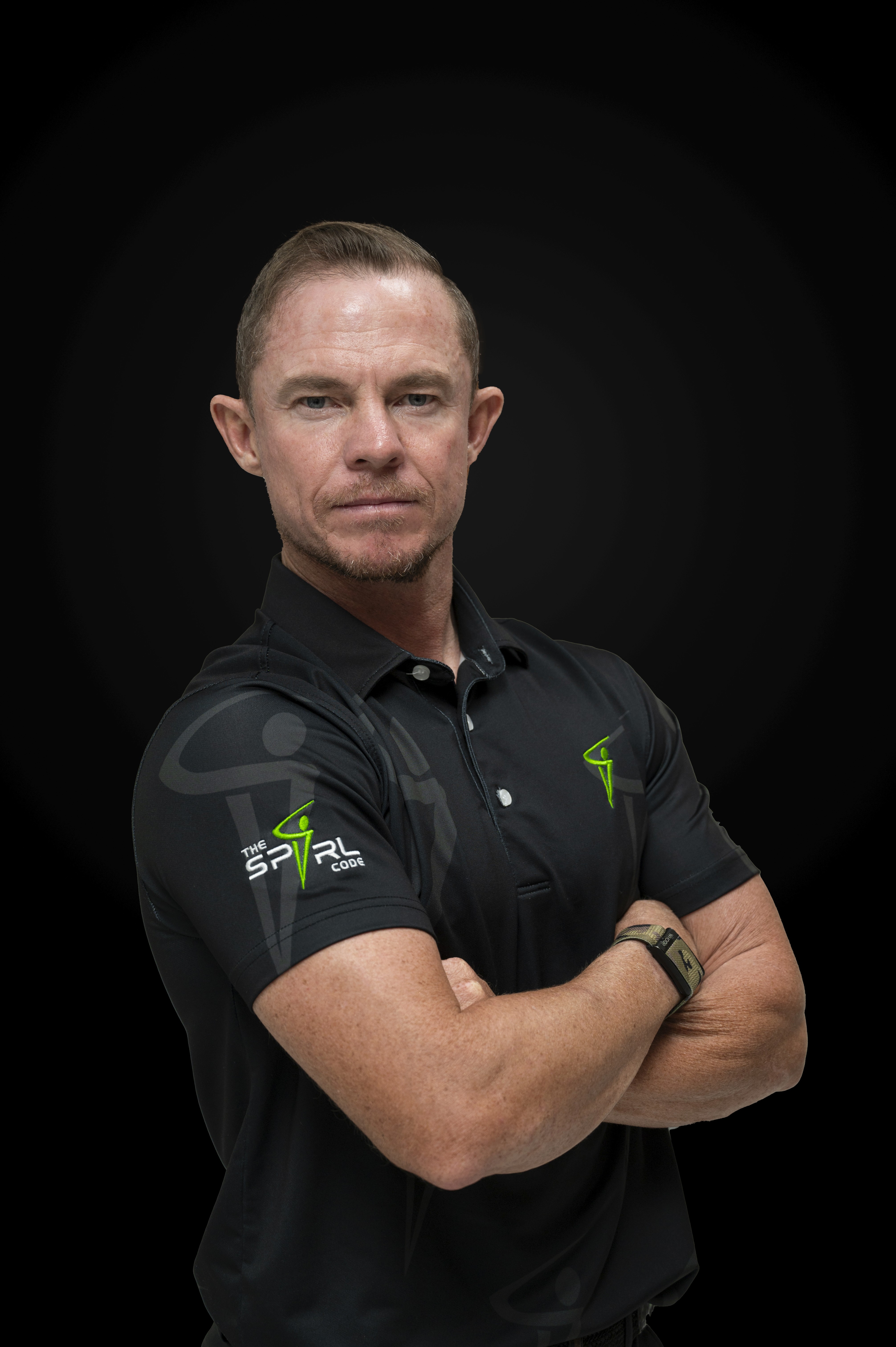
In this Spiral Code Master Track, Jonathan Craddock breaks down how the engine (body), transmission (shoulders), steering (arms & club), driver (mind), and pit crew (lifestyle) must work together to create one unified motion.

When each part connects, you don’t fight your swing — you flow through it.

Read More for the 0.01% Only.


🚨 FOR REAL GOLF ANORAKS ONLY – DO NOT READ UNLESS YOU’RE IN THE 0.01% CLUB.

The golf swing isn’t a collection of parts.
It’s a neuromechanical system wired from the ground up — a conversation between body, brain, and movement.

When that system syncs, consistency becomes inevitable. When it doesn’t, chaos creeps in, especially under pressure.

Here’s the breakdown:

1. The Engine — The Body

Spiral movement, not just rotation.
Power starts ground-up: feet → knees → hips → core structure → shoulders.
Stored across three planes: forward bend, side bend, rotation.
Activate the kinetic chain and you’ll feel effortless force.
Takeaway: Power comes from sequence, not effort.

2. The Steering — Arms & Club

Your arms deliver direction, not manipulation.
Downward pressure activates the chain; connection builds control.
Takeaway: The arms don’t swing — they steer.

3. The Transmission — Shoulders

The link between power and precision.
Shoulders spiral, stabilize, and transfer energy.
Draw = lead shoulder down and around.
Fade = trail shoulder stabilizes.
Straight = symmetrical spiral.
Takeaway: Shoulders don’t hit — they transfer feel.

4. The Driver — Mind

The mind directs the system, but only when trained.
Your prefrontal cortex makes decisions (shot, shape, routine).
Your basal ganglia stores patterns (your swing’s ECU).
Under pressure, you swing what’s rehearsed, not what you “know.”
Takeaway: The brain doesn’t store right or wrong. It stores repetition.

5. The Pit Crew — Lifestyle

Fuel, rest, and recovery drive consistency.
Nutrition, sleep, mobility, and mindset keep the system race-ready.
Takeaway: Your swing doesn’t exist in a vacuum — it lives within your life.

Programming Layer — CPU vs ECU

  • CPU: Conscious adjustments, overthinking, analysis.

  • ECU: Subconscious programming, pure motion memory.
    The brain doesn’t save “tips.” It saves what you repeat.
    That’s why range swings collapse under pressure — they’re not stored as systems.

Common Swing Failures

  • Stacking tips without foundation

  • Swinging harder instead of smarter

  • Compensating instead of coordinating

That’s why it works on the range… But breaks when it matters.

The Spiral Code Advantage

In this Master Track, you’ll learn how to:

  • Fuse biomechanics, psychology, and motor programming into one model

  • Build your swing like a Formula 1 system — where every part works in harmony

  • Install motion at the neurological level for automatic control under pressure

Because your swing doesn’t disappear under pressure — It reveals your default settings.

You’ll move better.
You’ll think clearer.
You’ll perform with a swing that was built — not borrowed.

“This is about building a system that performs every time.”
— Jonathan Craddock

Read More

Stacking tips doesn’t create consistency. Here in Core Principle 2 - Movement we explain how most golfers treat the swing like a checklist — grip here, hips there, arms drop, shoulders turn.
But great swings aren’t built by stacking; they’re built by syncing the system.

In this Spiral Code Master Track, Jonathan Craddock breaks down how the engine (body), transmission (shoulders), steering (arms & club), driver (mind), and pit crew (lifestyle) must work together to create one unified motion.

When each part connects, you don’t fight your swing — you flow through it.

Read More for the 0.01% Only.


🚨 FOR REAL GOLF ANORAKS ONLY – DO NOT READ UNLESS YOU’RE IN THE 0.01% CLUB.

The golf swing isn’t a collection of parts.
It’s a neuromechanical system wired from the ground up — a conversation between body, brain, and movement.

When that system syncs, consistency becomes inevitable. When it doesn’t, chaos creeps in, especially under pressure.

Here’s the breakdown:

1. The Engine — The Body

Spiral movement, not just rotation.
Power starts ground-up: feet → knees → hips → core structure → shoulders.
Stored across three planes: forward bend, side bend, rotation.
Activate the kinetic chain and you’ll feel effortless force.
Takeaway: Power comes from sequence, not effort.

2. The Steering — Arms & Club

Your arms deliver direction, not manipulation.
Downward pressure activates the chain; connection builds control.
Takeaway: The arms don’t swing — they steer.

3. The Transmission — Shoulders

The link between power and precision.
Shoulders spiral, stabilize, and transfer energy.
Draw = lead shoulder down and around.
Fade = trail shoulder stabilizes.
Straight = symmetrical spiral.
Takeaway: Shoulders don’t hit — they transfer feel.

4. The Driver — Mind

The mind directs the system, but only when trained.
Your prefrontal cortex makes decisions (shot, shape, routine).
Your basal ganglia stores patterns (your swing’s ECU).
Under pressure, you swing what’s rehearsed, not what you “know.”
Takeaway: The brain doesn’t store right or wrong. It stores repetition.

5. The Pit Crew — Lifestyle

Fuel, rest, and recovery drive consistency.
Nutrition, sleep, mobility, and mindset keep the system race-ready.
Takeaway: Your swing doesn’t exist in a vacuum — it lives within your life.

Programming Layer — CPU vs ECU

  • CPU: Conscious adjustments, overthinking, analysis.

  • ECU: Subconscious programming, pure motion memory.
    The brain doesn’t save “tips.” It saves what you repeat.
    That’s why range swings collapse under pressure — they’re not stored as systems.

Common Swing Failures

  • Stacking tips without foundation

  • Swinging harder instead of smarter

  • Compensating instead of coordinating

That’s why it works on the range… But breaks when it matters.

The Spiral Code Advantage

In this Master Track, you’ll learn how to:

  • Fuse biomechanics, psychology, and motor programming into one model

  • Build your swing like a Formula 1 system — where every part works in harmony

  • Install motion at the neurological level for automatic control under pressure

Because your swing doesn’t disappear under pressure — It reveals your default settings.

You’ll move better.
You’ll think clearer.
You’ll perform with a swing that was built — not borrowed.

“This is about building a system that performs every time.”
— Jonathan Craddock

Read More

About Author

Team Spiral represents the global coaching force behind The Spiral Code.

Every coach is hand selected and personally Peter Cowen certified, ensuring you receive the same world-class standard, wherever you are in the world.

Our team delivers private coaching camps internationally, working with clients across Dubai, Hong Kong, India, Africa, Europe, the USA, and the UK. Whether you’re looking for individual coaching or a bespoke group experience, we bring the system directly to you.

For in-person experiences, visit our Visit section to arrange your personalised camp.

Prefer to train remotely?
Our coaches are also available online through the Improve section, offering structured, personalised lessons built around your movement.

Train anywhere. Train with purpose. Train with the best.

Be notified of new courses as soon as they drop

Unlock All Lessons

Join the Spiral Code to gain access to our elite library

Unlock All Lessons

Join the Spiral Code to gain access to our elite library