/

/

Arm Hang: The Hidden Geometry of Consistency

Arm Hang: The Hidden Geometry of Consistency

CODE

MASTER TRACK

Beginner

duration

02:53

publish date

what you'll learn

Natural Movement

Arm Positioning

Movement Efficiency

Balance Integration

Lesson details

Most golfers try to place their arms. Elite golfers let their arms hang.


This lesson reveals the geometry behind natural arm structure and why freedom, not force, creates repeatable motion.

You’ll learn how:

  • Gravity sets your true radius

  • Hip hinge + spine tilt determine natural arm spacing

  • Functional arm hang improves sequencing and reduces tension

  • Lead and trail arms operate as a pair, not as separate tasks

  • Your arm hang subtly adapts from wedges → driver without losing identity

When your arms hang naturally, your swing arc stabilises, your shoulders stop overworking, and your entire motion becomes smoother and more predictable.
This isn’t about style.
This is about structure you can trust — every swing, every club.

Read More for the 0.01% Only.


🚨 FOR REAL GOLF ANORAKS ONLY — DO NOT READ UNLESS YOU'RE IN THE 0.01% CLUB.

The Elite Geometry Behind Arm Hang — What Most Players Never Learn

Arm hang isn’t cosmetic. It’s biomechanical.

When you set your arms correctly:

  • The scapula sits neutral

  • The thoracic spine can rotate freely

  • The radius becomes consistent

  • Grip pressure relaxes

  • Transition becomes reactive, not rigid

This lesson dives into the real science:

The Gravity-Driven Arm Chain

Natural arm hang unlocks:

  • Consistent radius at address

  • Neutral wrist condition

  • Better clubface awareness

  • Clean shoulder rotation

Forced arm placement — especially “tuck the trail elbow” — locks the chain and corrupts sequencing.

Three Pro-Level Calibrations

The Fall Drill
Drop the club from chest height and let the arms settle — reveals your personal geometry.

TPI Arm Hang Test
Tilt forward and observe the natural hand position from the sockets.

Wedge/Driver Tilt Drill
More tilt = more arm reach; less tilt = softer radius.
The posture dictates the hang — not vice versa.

Case Studies from the Greats

Ben Hogan — “Ropes off the shoulders.” Zero tension.
Adam Scott — Hands under chin, clean radius.
Prime Tiger — Soft arms, active torso; when he tightened, he struggled.

The pattern is universal:
Great players don’t place their arms — they allow them to hang.

Spiral Code Takeaway

Arm faults are surface symptoms.
The root causes are:

  • Posture

  • Balance points

  • Gravity

  • Awareness

Fix posture. Let gravity show the geometry.
Then train feel — not force.

Let the arms hang.
Let the triangle build itself.
Let the spiral take over.
This is how elite consistency begins.

Read More

Most golfers try to place their arms. Elite golfers let their arms hang.


This lesson reveals the geometry behind natural arm structure and why freedom, not force, creates repeatable motion.

You’ll learn how:

  • Gravity sets your true radius

  • Hip hinge + spine tilt determine natural arm spacing

  • Functional arm hang improves sequencing and reduces tension

  • Lead and trail arms operate as a pair, not as separate tasks

  • Your arm hang subtly adapts from wedges → driver without losing identity

When your arms hang naturally, your swing arc stabilises, your shoulders stop overworking, and your entire motion becomes smoother and more predictable.
This isn’t about style.
This is about structure you can trust — every swing, every club.

Read More for the 0.01% Only.


🚨 FOR REAL GOLF ANORAKS ONLY — DO NOT READ UNLESS YOU'RE IN THE 0.01% CLUB.

The Elite Geometry Behind Arm Hang — What Most Players Never Learn

Arm hang isn’t cosmetic. It’s biomechanical.

When you set your arms correctly:

  • The scapula sits neutral

  • The thoracic spine can rotate freely

  • The radius becomes consistent

  • Grip pressure relaxes

  • Transition becomes reactive, not rigid

This lesson dives into the real science:

The Gravity-Driven Arm Chain

Natural arm hang unlocks:

  • Consistent radius at address

  • Neutral wrist condition

  • Better clubface awareness

  • Clean shoulder rotation

Forced arm placement — especially “tuck the trail elbow” — locks the chain and corrupts sequencing.

Three Pro-Level Calibrations

The Fall Drill
Drop the club from chest height and let the arms settle — reveals your personal geometry.

TPI Arm Hang Test
Tilt forward and observe the natural hand position from the sockets.

Wedge/Driver Tilt Drill
More tilt = more arm reach; less tilt = softer radius.
The posture dictates the hang — not vice versa.

Case Studies from the Greats

Ben Hogan — “Ropes off the shoulders.” Zero tension.
Adam Scott — Hands under chin, clean radius.
Prime Tiger — Soft arms, active torso; when he tightened, he struggled.

The pattern is universal:
Great players don’t place their arms — they allow them to hang.

Spiral Code Takeaway

Arm faults are surface symptoms.
The root causes are:

  • Posture

  • Balance points

  • Gravity

  • Awareness

Fix posture. Let gravity show the geometry.
Then train feel — not force.

Let the arms hang.
Let the triangle build itself.
Let the spiral take over.
This is how elite consistency begins.

Read More

About Author

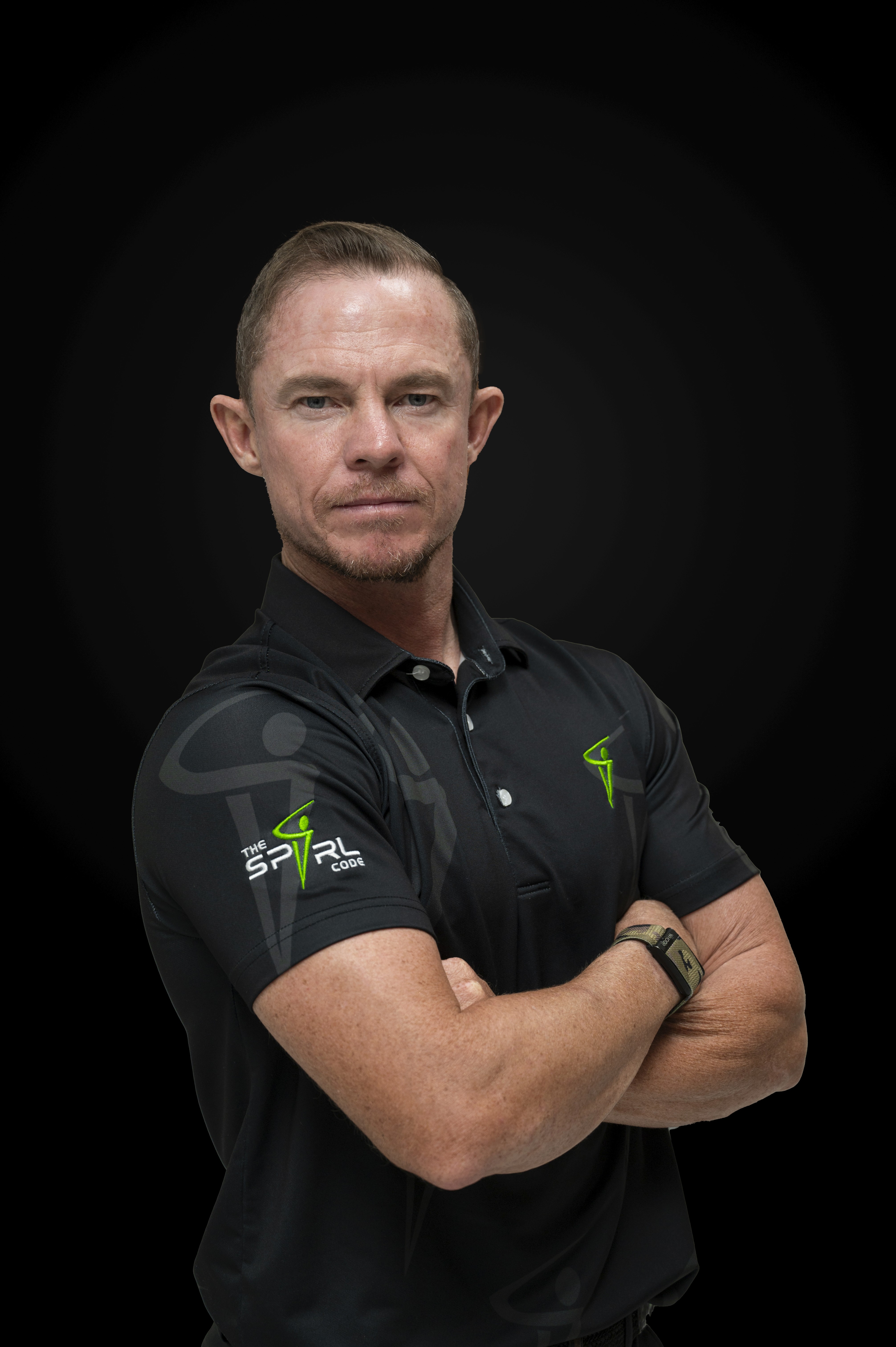
Jonathan Craddock

The Spiral Code Director of Instruction & Peter Cowen Master Coach

Jonathan Craddock is an elite performance coach with The Spiral Code, teaching globally through personal tuition and golf schools. Jonathan brings over two decades of experience to his role. He specializes in designing tailored programs for golfers of all levels, from junior elites to aspiring professionals.


Jonathan began his career under the mentorship of David Dunk, a retired UK tour player whose dedication and ethos left a lasting impact. His commitment to continuous learning was further inspired by Peter Cowen's own pursuit of improvement, even amidst success. Jonathan embraces this philosophy, striving to help his students reach new heights in their game.
Throughout his career, Jonathan has created and implemented golf development programs for schools, colleges, and federations.  One of his notable initiatives, The Peter Cowen Junior Development Program, will be available to you soon inside of the members area.


Qualifications
With 20 years of teaching experience, Jonathan Craddock is a Master Peter Cowen Professional and an Advanced PGA Qualified Instructor. He is a Level 3 member of the Club Managers Association of Europe, demonstrating his extensive knowledge of golf coaching and club management.


Jonathan's qualifications include a comprehensive range of specialized certifications, ensuring a well-rounded approach to golf instruction.

Level 3 Qualified Personal Trainer
Level 2 Golfing Machine Instructor
Titleist Performance Institute (TPI) certified in Junior, Golf Mechanics, Power, and Fitness
Dr. Kwon Biomechanics Level 2 certified
Paul Chek Biomechanics certified
K-Motion Biomechanics certified
BodiTrak Ground Force Mechanics certified
Trackman University Level 2 certified
GravityFit qualified

Be notified of new courses as soon as they drop
Unlock All Lessons

Join the Spiral Code to gain access to our elite library

Unlock All Lessons

Join the Spiral Code to gain access to our elite library